
Anxiety doesn’t always look like a panic attack. Sometimes it’s the racing thoughts at 2 a.m., the tight chest during a meeting, or the sense that your body is bracing for something even when nothing is wrong. You’ve probably already tried talking it through, journaling it out, or just pushing past it. Sometimes, none of that quite reaches the place where the anxiety actually lives. Art therapy for anxiety offers another way to begin processing those feelings.
Art therapy is an evidence-based approach that doesn’t ask you to explain what you’re feeling before you’re ready to. Instead, it gives anxiety somewhere else to go besides your chest.
Can Art Therapy Help Anxiety?
Yes. Art therapy uses the creative process itself, not just the finished piece, to help regulate the nervous system and process emotions that feel too big or too tangled for words. It’s not about making something that looks good. It’s about giving anxiety a different outlet than your thoughts.
Why Anxiety Can Feel Difficult to Put Into Words
Anxiety lives in the body as much as the mind. It can show up as:
- Racing, looping thoughts that resist being organized into sentences
- Physical symptoms — a tight jaw, shallow breathing, restlessness
- Nervous system dysregulation, that “on edge” feeling with no clear trigger
- A general sense of emotional overwhelm that’s hard to name, let alone explain out loud
When anxiety feels this physical, sitting down to talk about it can feel like starting in the wrong place.
How Art Therapy Helps Reduce Anxiety
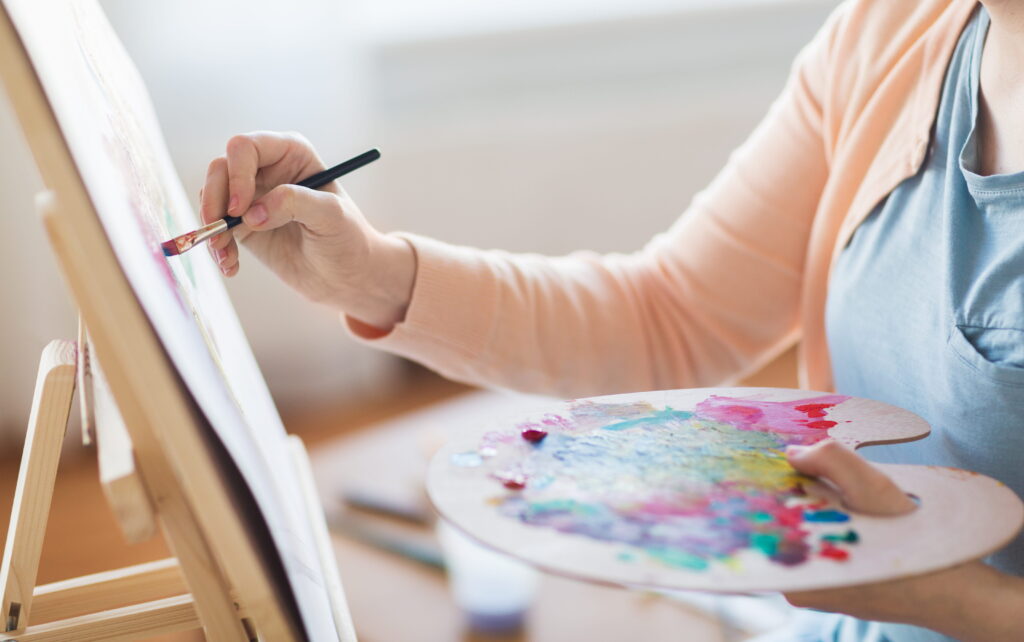
Art therapy for anxiety engages the senses in a way that talking alone often doesn’t. Working with color, texture, and movement helps shift the nervous system out of a stress response and into a calmer state, much like rhythmic, repetitive movement. It also activates parts of the brain involved in emotion and memory before language gets involved, which is one reason creative expression can sometimes reach feelings that words haven’t been able to.
Not sure if this fits your situation? Schedule a consultation and we’ll talk through whether art therapy could be a good next step for you.
What to Expect During an Art Therapy Session
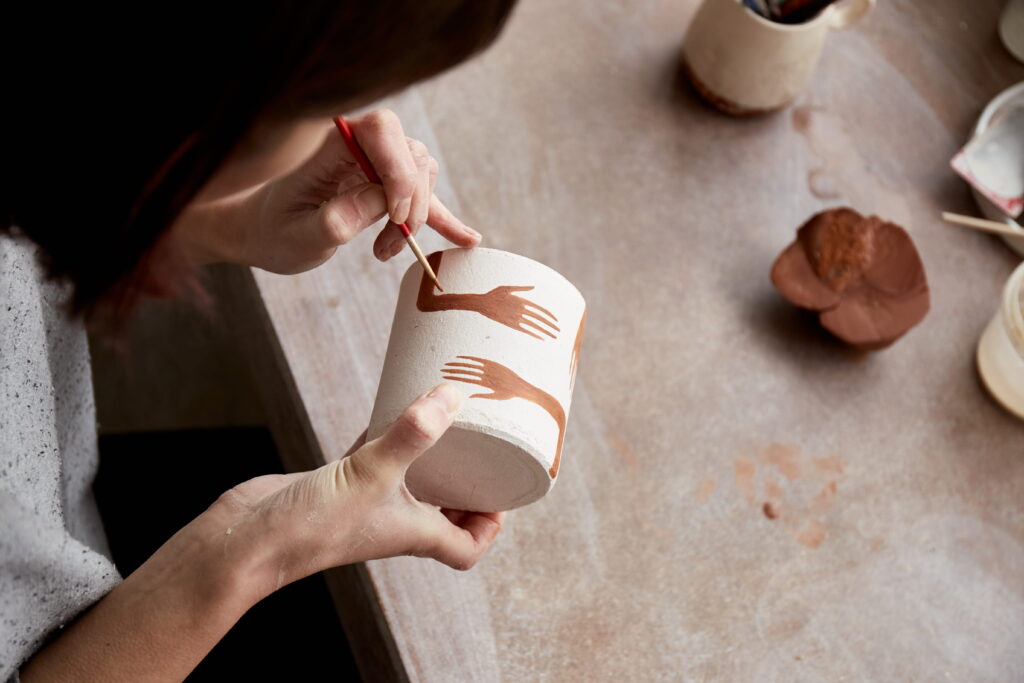
You don’t need to be “good at art.” This isn’t an art class. A trained art therapist guides the process, offering materials like paint, clay, collage, or drawing tools depending on what feels right for you that day. Some sessions focus on a specific prompt or feeling; others simply follow wherever the creative process leads. There’s no wrong way to do it, and nothing you make needs to be explained or interpreted unless you want it to be.
Our resident Art Therapist, Stephanie Watson, works with clients to shape each art therapy session around what they need, not around a fixed formula.
Is Art Therapy Right for You?
Art therapy tends to help people navigate anxiety, perfectionism, burnout, or chronic stress, and it works for both teens and adults. It’s often used alongside talk therapy rather than in place of it, giving clients another way to process what’s harder to access through conversation alone.
Art Therapy and Talk Therapy: How They Work Together
Art therapy isn’t a replacement for talk therapy: the two work well together. Traditional talk therapy helps you make sense of a difficult experience; art therapy can help you access and process it in the first place, especially when it feels too big for words.
According to Psychiatry.org, art therapy is used to reduce distress, foster self-esteem, and build emotional resilience — often alongside, not instead of, other forms of care. Our own past post on the benefits of art therapy goes deeper into what this can look like across different needs.
If anxiety has been asking for more than words can hold, you don’t have to figure out the right approach alone.
FAQ
Do I have to be artistic?
No. Art therapy isn’t about skill or outcome: it’s about the process, and it works whether or not you’ve ever picked up a paintbrush before.
Is art therapy evidence-based?
Yes. Research supports art therapy as an effective approach for reducing anxiety symptoms and supporting emotional regulation, particularly when paired with other therapeutic approaches.
Is art therapy covered by insurance?
It depends on your plan. Our practice doesn’t bill art therapy sessions under a different service code than traditional talk therapy — another reason we prefer to stay out-of-network, since it keeps billing simple and consistent regardless of the approach used in session. As an out-of-network provider, we provide a superbill you can submit for potential reimbursement — read our guide to how that works for more detail.